What's Growing on Florida?
Agave pups
Agave pups
Couldn't load pickup availability
Agave — The Ancient Plant Behind Tequila, Nectar, and a Thousand Years of Human History
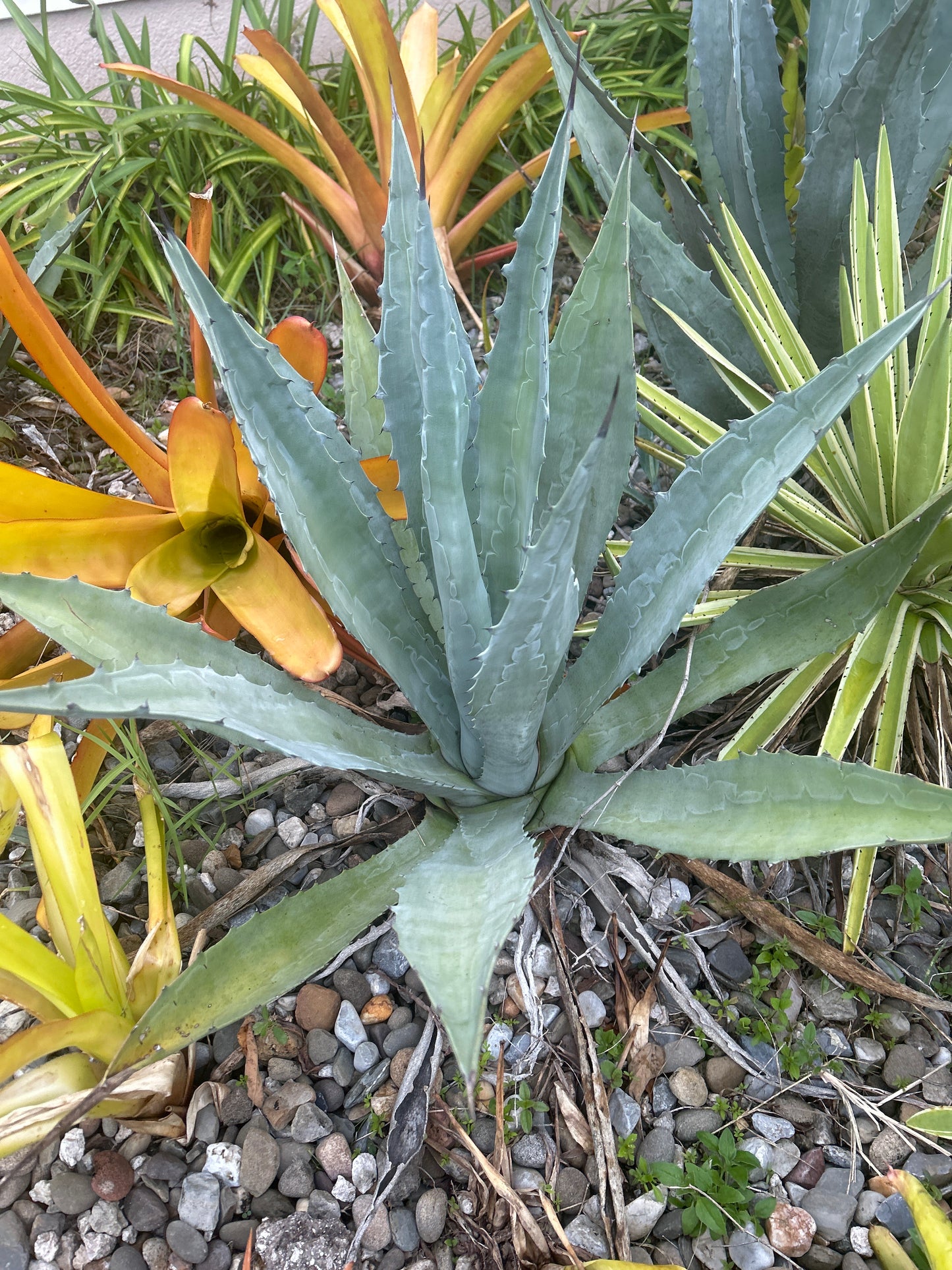
Agave pups, organically grown right here in Florida and ready to plant. Few plants on earth have shaped human civilization quite like agave. For over a thousand years, the indigenous peoples of Mexico and the American Southwest used every part of the agave plant — the leaves for fiber and rope, the spines as needles, the sap as a sweetener and fermented beverage, the roasted heart as food. Today, agave is best known as the source of tequila and mezcal — but it's also one of the most architecturally striking, drought-tolerant, and genuinely useful plants you can grow in a Florida garden. And it couldn't be easier.
The Many Lives of Agave
🍶 Tequila & Mezcal
The most famous agave product in the world. Blue Agave (Agave tequilana) is the species used for tequila, while dozens of other agave species are used to produce mezcal — the smoky, complex spirit that predates tequila by centuries. The process involves harvesting the massive central heart (the piña) of a mature agave, roasting or steaming it to convert starches to sugars, then fermenting and distilling. A single agave plant takes 7–25 years to mature before harvest — making every bottle of tequila a genuinely patient endeavor.
🍯 Agave Nectar
Agave nectar (also called agave syrup) is produced from the sap of the agave plant and has gained widespread popularity as a natural sweetener. It's approximately 1.5x sweeter than refined sugar, meaning you use less of it, and has a lower glycemic index than table sugar — making it a popular choice for those managing blood sugar levels. The flavor is mild and neutral, making it an excellent substitute for sugar or honey in beverages, baking, and cooking.
🌿 Fiber & Traditional Uses
Agave leaves contain strong, durable fibers (sisal) that have been used for centuries to make rope, twine, baskets, and textiles. The sharp terminal spine was used as a needle by indigenous peoples. The roasted heart of the agave — the piña — is edible and was a significant food source for many cultures. Truly a whole-plant resource.
🌱 Xeriscaping & Landscape Design
In the garden, agave is a designer's dream — bold, architectural, and virtually indestructible. The dramatic rosette form and striking silhouette make it a natural focal point in any landscape. It's one of the most drought-tolerant plants on earth, making it ideal for Florida's dry seasons and water-conscious gardeners.
Why Agave Thrives in Florida
- Extreme drought tolerance: Once established, agave can survive extended dry periods with zero irrigation. The thick, water-storing leaves are built for drought.
- Heat-loving: Florida's intense summer heat is exactly what agave wants. It thrives in conditions that stress most other plants.
- Low-maintenance: Plant it, give it sun and well-draining soil, and largely leave it alone. One of the most self-sufficient plants you can grow.
- Architectural beauty: The bold rosette form adds dramatic structure to any garden, xeriscape, or container planting.
- Pollinator value: When agave finally flowers — sending up a dramatic flower spike that can reach 20+ feet — it becomes a magnet for bats, hummingbirds, and bees. A once-in-a-lifetime garden event.
- Propagates freely: Agave produces pups (offsets) around the base of the mother plant, giving you a continuous supply of new plants to expand your garden or share.
The Agave Life Cycle — The Century Plant Story
Agave is sometimes called the "Century Plant" — a slight exaggeration, but not by much. Most agave species take anywhere from 10 to 30 years to reach maturity and flower. When they finally do, they send up a spectacular flower spike — sometimes 20–30 feet tall — covered in thousands of flowers. After flowering, the mother plant dies — but not before producing a ring of pups around its base that carry on its legacy. It's one of nature's most dramatic life cycles, and witnessing it in your own garden is genuinely unforgettable.
How to Plant Your Pups
- Choose your spot carefully: Agave is permanent — choose a location with full sun and plenty of space for the mature plant. Keep away from walkways and areas where people brush past — the terminal spines are sharp.
- Soil is critical: Agave must have excellent drainage. Sandy Florida soils are ideal. Amend heavy soils with coarse sand or gravel. Agave will rot in poorly draining soil.
- Plant at the right depth: Plant the pup at the same depth it was growing — don't bury the base too deep.
- Wait to water: Water once after planting, then leave it alone for 2–3 weeks while roots establish.
- Mulch lightly: A light layer of gravel or coarse mulch around the base helps with drainage and temperature regulation.
Growing Tips for Florida Gardeners
- Sun: Full sun is essential. Agave in shade becomes weak, floppy, and loses its dramatic form.
- Water: Minimal once established. Water deeply every 2–4 weeks in dry periods; reduce to monthly or less in Florida's rainy season. Overwatering is the primary cause of agave failure.
- Soil: Fast-draining is non-negotiable. Sandy soil, raised beds, or containers with excellent drainage.
- Fertilizer: Rarely needed. A light application of balanced organic fertilizer in spring is more than sufficient.
- Pups: Remove pups from the mother plant with a sharp spade when they're 4–6 inches tall. Allow the cut end to dry for a day before planting.
- Safety: The terminal spine at the tip of each leaf is extremely sharp. Consider clipping the tips with pruning shears in high-traffic areas, or plant where people won't brush against it.
Organically grown in Florida 🌿 | Ships as young pups ready to plant | One of earth's most drought-tolerant plants
Share