What's Growing on Florida?
Spanish Nettle/Biden Alba seeds
Spanish Nettle/Biden Alba seeds
Couldn't load pickup availability
Bidens Alba (Spanish Nettle) — Florida's Most Underrated Wild Superfood
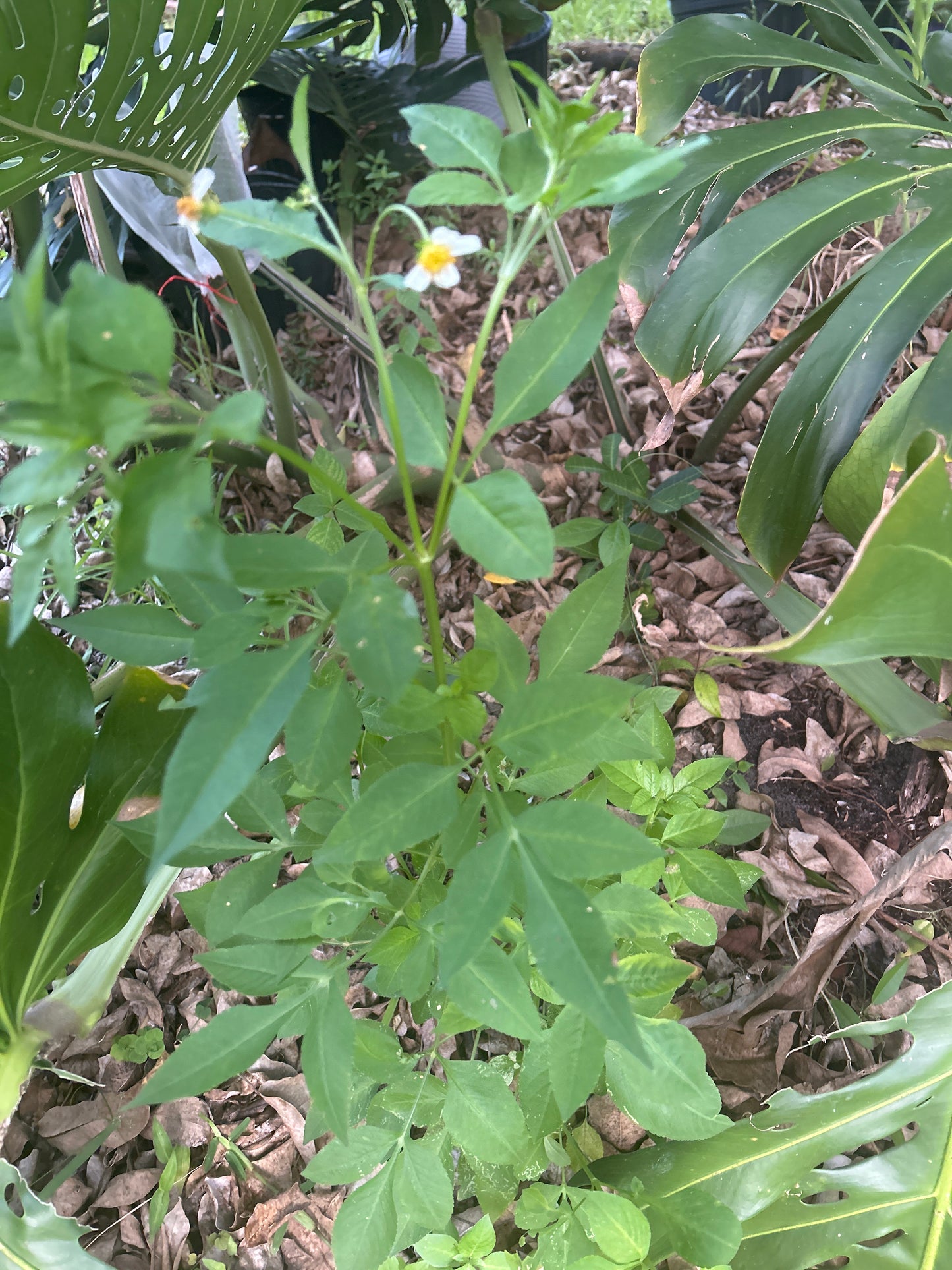
Approximately 20 seeds per packet. Bidens alba — known across Florida as Spanish Nettle, Spanish Needle, or simply Bidens — is one of the most nutritionally dense, ecologically valuable, and criminally overlooked plants growing wild in this state. You've almost certainly walked past it a hundred times without knowing what it was: the cheerful little white daisy with yellow center, growing in disturbed ground, roadsides, and garden edges across Florida. Most people pull it as a weed. Growers who know better let it thrive — and eat it, brew it, and watch their pollinators go wild for it.
The Plant That Florida Beekeepers Swear By
Before we talk about what you can do with Bidens alba, let's talk about what it does on its own: it is one of the single most important nectar plants for honeybees in Florida. During the fall and winter months when most flowering plants have stopped blooming, Bidens alba keeps flowering — providing a critical nectar and pollen source that sustains bee colonies through the lean season. Florida beekeepers actively protect and cultivate it for this reason. If you grow Bidens alba, you are directly supporting your local pollinator population. Butterflies, native bees, and hummingbirds are also frequent visitors. This is not just a food plant — it's a living ecosystem service.
Nutritional Profile — A True Wild Superfood
Bidens alba has been studied extensively in ethnobotanical and nutritional research, and the results are remarkable for what most people dismiss as a roadside weed:
- Antioxidants: Rich in flavonoids, polyphenols, and other antioxidant compounds that protect against oxidative stress and inflammation.
- Vitamins: Good source of vitamins A, C, and E — the antioxidant vitamin trio.
- Minerals: Contains calcium, iron, potassium, and magnesium.
- Protein: Higher protein content than many cultivated leafy greens — notable for a wild edible.
- Anti-inflammatory compounds: Traditional medicine systems across Africa, Asia, and the Americas have used Bidens species for centuries to reduce inflammation, support wound healing, and address infections. Modern research has begun to validate many of these traditional uses.
What Does It Actually Taste Like?
Here's what surprises most people the first time they try it: Bidens alba is remarkably mild. The texture falls somewhere between parsley and lettuce — tender but with a little body. The flavor follows the same middle ground: not as assertive as parsley, not as neutral as iceberg, but genuinely pleasant and easy to eat. There's no spiciness, no sharpness, and none of the peppery bite you'd get from arugula.
The leaves stay neutral and approachable through most of the plant's life. A slight bitterness only begins to develop once the plant starts flowering — and even then, it's subtle, nothing like the bitterness of mature arugula or dandelion greens. This makes Bidens alba one of the most accessible wild edibles you can grow — no acquired taste required. Young children, picky eaters, and first-time wild food foragers all tend to accept it easily.
Culinary Uses
Every above-ground part of Bidens alba is edible — leaves, stems, flowers, and young shoots:
- Raw in salads: Young leaves blend seamlessly into any salad — the mild, neutral flavor won't overpower other ingredients. A genuinely easy wild green to incorporate into everyday eating.
- Cooked like spinach: Sauté or steam the leaves with garlic and olive oil for a simple, nutritious side dish. Cooking mellows the flavor even further and the texture holds up beautifully. Works well in stir-fries, soups, rice dishes, and egg scrambles.
- Herbal tea: Dry the leaves and flowers and steep for a mild, earthy herbal tea. Bidens alba tea has a long history of traditional use across tropical regions for immune support, digestive health, and anti-inflammatory benefits. Blend with other herbs for a more complex flavor profile.
- Smoothies: Add a handful of fresh young leaves to green smoothies — the neutral flavor disappears completely into fruit-based blends while adding significant nutritional value.
- Pesto & sauces: Blend young leaves with olive oil, garlic, nuts, and lemon for a wild green pesto. The mild flavor makes it more versatile than strongly flavored greens.
- Flowers as garnish: The small white daisy flowers are edible and make a beautiful, delicate garnish for salads, desserts, and cocktails.
Traditional & Medicinal Uses
*These statements have not been evaluated by the Food and Drug Administration. This product is not intended to diagnose, treat, cure, or prevent any disease.
- Wound healing: Fresh leaves have been applied topically to cuts, insect bites, and skin irritations across traditional medicine systems in Africa, Asia, and the Americas.
- Anti-inflammatory: Bidens species have been used traditionally to reduce inflammation and are the subject of ongoing pharmacological research.
- Immune support: Bidens alba tea is used traditionally across tropical regions as a general immune tonic.
- Digestive support: Used in traditional medicine to ease digestive discomfort and support gut health.
How to Grow from Seed
- Direct sow: Bidens alba grows best when direct-sown where it will grow. Scatter seeds on the soil surface and press lightly — they need light to germinate. Do not cover deeply.
- Soil: Remarkably unfussy. Thrives in poor, sandy, or disturbed soils — the kind of conditions that challenge most garden plants. Well-draining soil is ideal but not required.
- Sun: Full sun to partial shade. Grows fastest in full Florida sun.
- Water: Minimal once established. Bidens alba is drought-tolerant and thrives in Florida's dry season with little to no supplemental irrigation.
- Germination: Typically germinates within 7–14 days in warm Florida conditions.
- Growth rate: Fast. Plants can reach flowering size within 4–6 weeks of germination in Florida's warm climate.
- Self-seeding: Bidens alba self-seeds prolifically — plant it once and it will naturalize in your garden, providing a permanent, self-sustaining supply.
Growing Tips for Florida Gardeners
- Harvest before flowering for best flavor: The leaves are at their mildest and most neutral before the plant begins to flower. Harvest young shoot tips regularly to keep the plant in a leafy, productive state and delay flowering.
- Let it naturalize: Establish a patch and allow it to self-seed for a permanent, low-maintenance supply of fresh greens and pollinator habitat.
- Manage spread: Bidens alba spreads readily via its sticky seeds. Deadhead flowers before they set seed if you want to control its spread, or let it naturalize freely in a designated area.
- No pest pressure: Virtually pest-free. One of the most resilient plants you can grow in Florida.
- Companion planting: Excellent companion plant — attracts beneficial insects and pollinators that benefit surrounding crops.
Florida-grown seeds 🌿 | Approx. 20 seeds per packet | One of Florida's most important pollinator plants | Edible from leaf to flower
Share