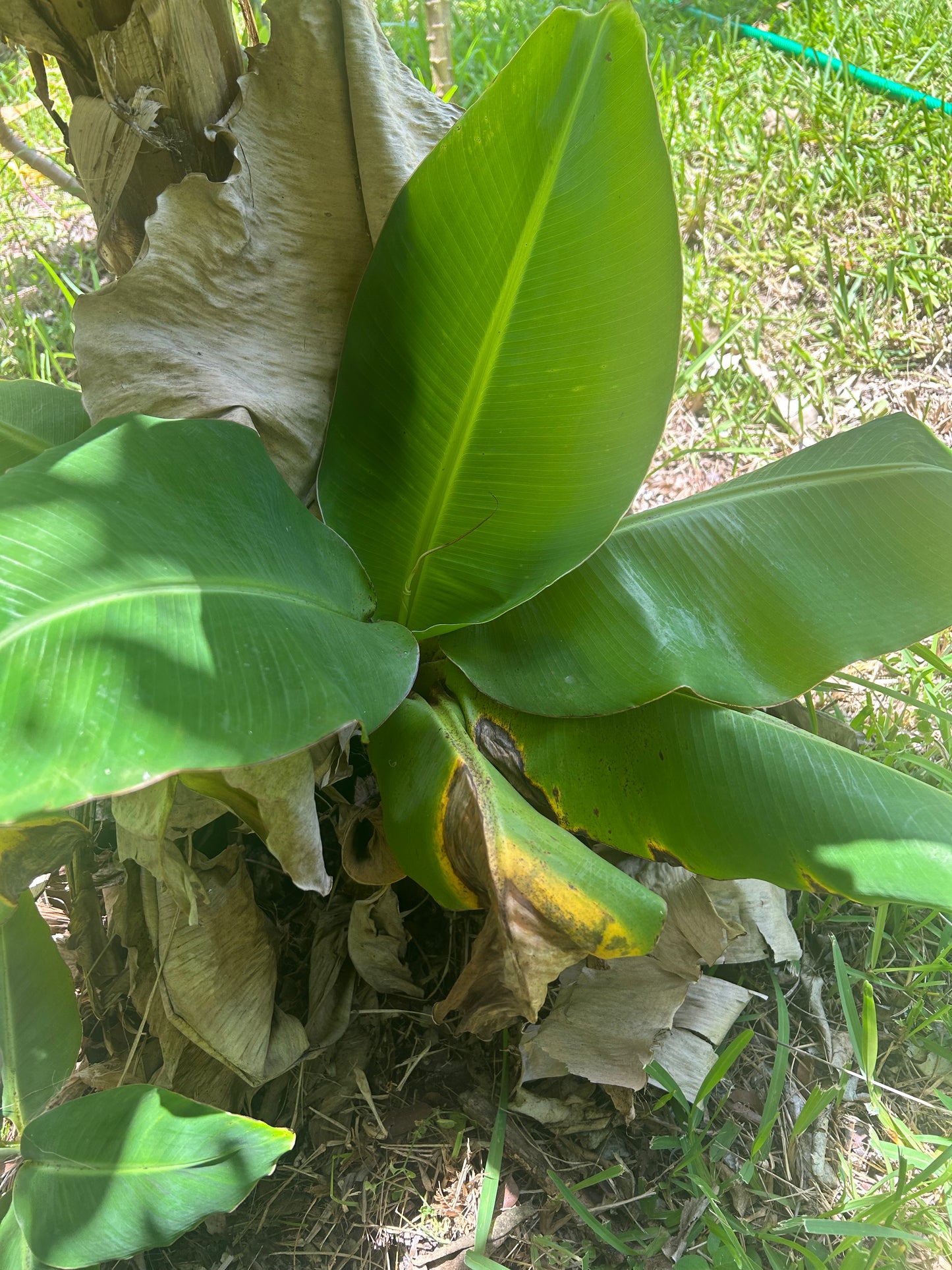
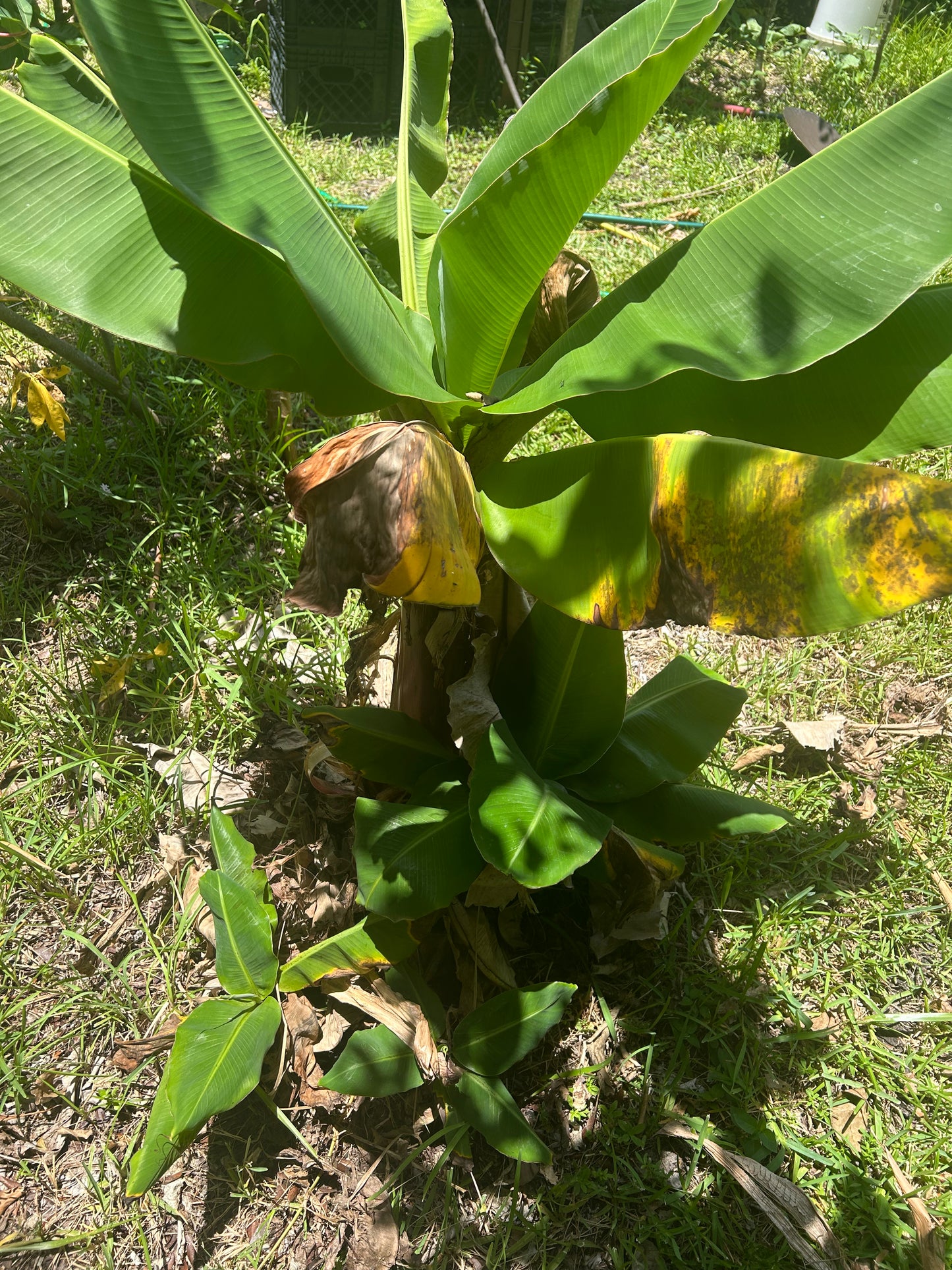
What's Growing on Florida?
Dwarf Cavendish banana pups
Dwarf Cavendish banana pups
Couldn't load pickup availability
Dwarf Cavendish Banana — The World's Most Popular Banana, Now in Your Florida Garden
Young Dwarf Cavendish Banana pups (Musa acuminata ‘Dwarf Cavendish’), organically grown right here in Florida and ready to plant. The Cavendish banana is the most consumed fruit on earth — the one in every grocery store, every smoothie, every lunchbox. But there's a world of difference between a banana you buy and a banana you grow yourself. Homegrown Cavendish bananas, harvested at true peak ripeness rather than picked green and gassed, have a depth of flavor and sweetness that grocery store bananas simply cannot match. And the Dwarf Cavendish gives you all of that in a compact, manageable plant that fits beautifully in small gardens, food forests, and large containers.
Why Dwarf Cavendish?
- Compact & container-friendly: Unlike full-sized banana varieties that can reach 20+ feet, Dwarf Cavendish rarely exceeds 5–6 feet tall — making it ideal for small gardens, patios, balconies, and large containers. Full-sized fruit on a small plant.
- Full-sized fruit: Despite its compact stature, Dwarf Cavendish produces full-sized bunches of the classic Cavendish banana you know and love — with noticeably better flavor when grown at home and allowed to ripen fully on the plant.
- Stunning tropical foliage: Young plants feature striking red or purple markings on the leaves — a beautiful ornamental quality that makes it as attractive as it is productive. As the plant matures, the foliage transitions to lush, classic tropical green.
- Fast-growing: In Florida's warm, humid climate, Dwarf Cavendish grows vigorously and typically begins producing fruit within 12–18 months — faster than many other banana varieties.
- Perfect for food forests & permaculture: The compact size and fast growth make Dwarf Cavendish an ideal understory plant in food forest designs.
The Homegrown Difference
Commercial bananas are harvested weeks before they're ripe, then artificially ripened with ethylene gas in warehouses. The result is a banana that's edible but never reaches its full flavor potential. A homegrown Cavendish banana, allowed to ripen fully on the plant until the skin begins to spot and the sugars fully develop, is a genuinely different eating experience — sweeter, more complex, and more aromatic than anything you can buy. Once you've tasted a truly tree-ripened banana, grocery store bananas feel like a pale imitation.
Culinary Uses
- Fresh eating: Allow to ripen fully on the plant until the skin is yellow with brown spots — this is peak flavor. The difference from a store-bought banana is immediately apparent.
- Smoothies & nice cream: Freeze ripe bananas and blend for a creamy, naturally sweet base for smoothies and one-ingredient nice cream.
- Baking: Overripe homegrown bananas make exceptional banana bread, muffins, and pancakes — the flavor is richer and more intense than store-bought.
- Grilled: Slice lengthwise and grill for 3–4 minutes for a caramelized, dessert-worthy treat. Serve with coconut cream and honey.
- Dried banana chips: Slice thin and dehydrate for naturally sweet, preservative-free banana chips.
- Peel tea: Dry the peels at low heat (around 120°F in a convection oven) and steep for a surprisingly sweet, naturally flavored herbal tea — a zero-waste use for every part of the fruit.
How to Plant Your Pup
- Choose your spot: Full sun, sheltered from strong winds. The large leaves can shred in high winds, though the plant recovers quickly.
- Prepare the soil: Rich, moist, well-draining soil amended generously with compost.
- Plant the pup: Plant at the same depth it was growing. Firm the soil around the base and water in thoroughly.
- Mulch the base: Lay organic material around the base and return trimmings as mulch whenever you prune. This helps retain moisture and adds nutrients over time.
- Water regularly: Keep consistently moist while establishing — water deeply 2–3 times per week in dry periods.
Growing Tips for Florida Gardeners
- Sun: Full sun for best growth and fruiting. Minimum 6 hours daily.
- Water: Consistent moisture is key. Mulching the base helps retain soil moisture between waterings.
- Fertilizer: Unlike larger banana varieties with abundant leaf biomass to cycle back, the Dwarf Cavendish produces less trimming material — so it benefits from regular supplemental feeding. Apply a balanced organic fertilizer monthly during the growing season to keep it productive and vigorous. Potassium is especially important for fruit development.
- The banana flower: Once your bunch has fully set and all the hands of bananas have formed, remove the dangling flower blossom (the large purple-red teardrop at the end of the bunch). This redirects the plant's energy entirely into ripening the fruit rather than continuing to develop the flower. And don't discard it — banana blossoms are edible and delicious. Slice the inner petals thin for stir-fries (they have a meaty, artichoke-like texture), or dry them for use in herbal tea blends. A true zero-waste harvest.
- Size management: At 5–6 feet, Dwarf Cavendish is naturally manageable. Remove pups regularly to keep the planting tidy and direct energy to the fruiting plant.
- Fruiting timeline: Typically 12–18 months from planting to first fruit in Florida's climate — one of the faster banana varieties.
- After fruiting: The mother plant dies after producing its bunch. Cut it down, return the biomass to the base as mulch, and allow the pups to take over — a permanent, self-renewing banana patch.
- Containers: Use a large container (25+ gallons) with rich potting mix. Water more frequently than in-ground plants and feed monthly with a balanced organic fertilizer.
Organically grown in Florida 🌿 | Ships as young pups ready to plant | Typically fruits within 12–18 months | Fruit + peel + blossom — zero waste
Share