What's Growing on Florida?
Ice cream banana pups
Ice cream banana pups
Couldn't load pickup availability
Ice Cream Banana (Blue Java) — The Banana That Tastes Like Vanilla Ice Cream
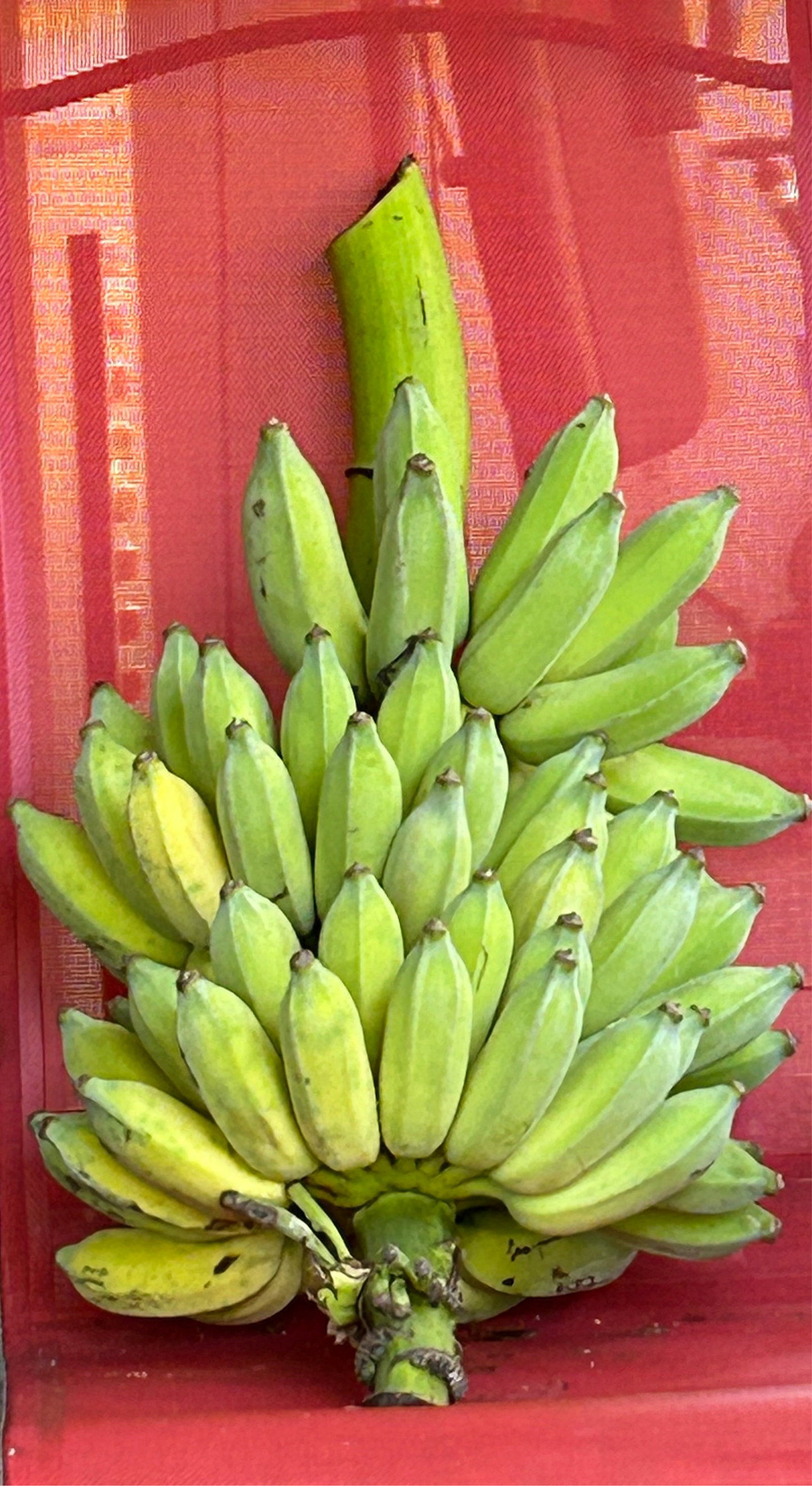
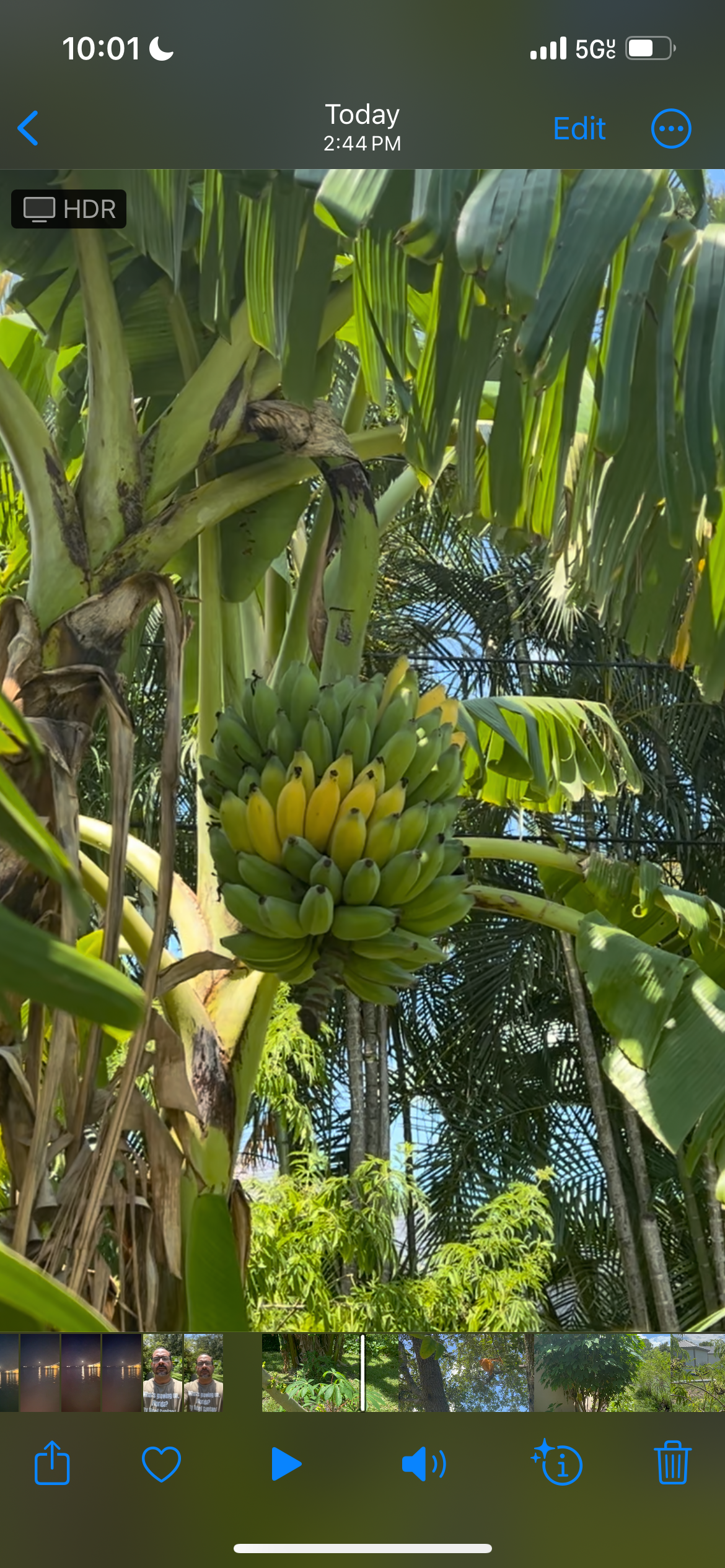
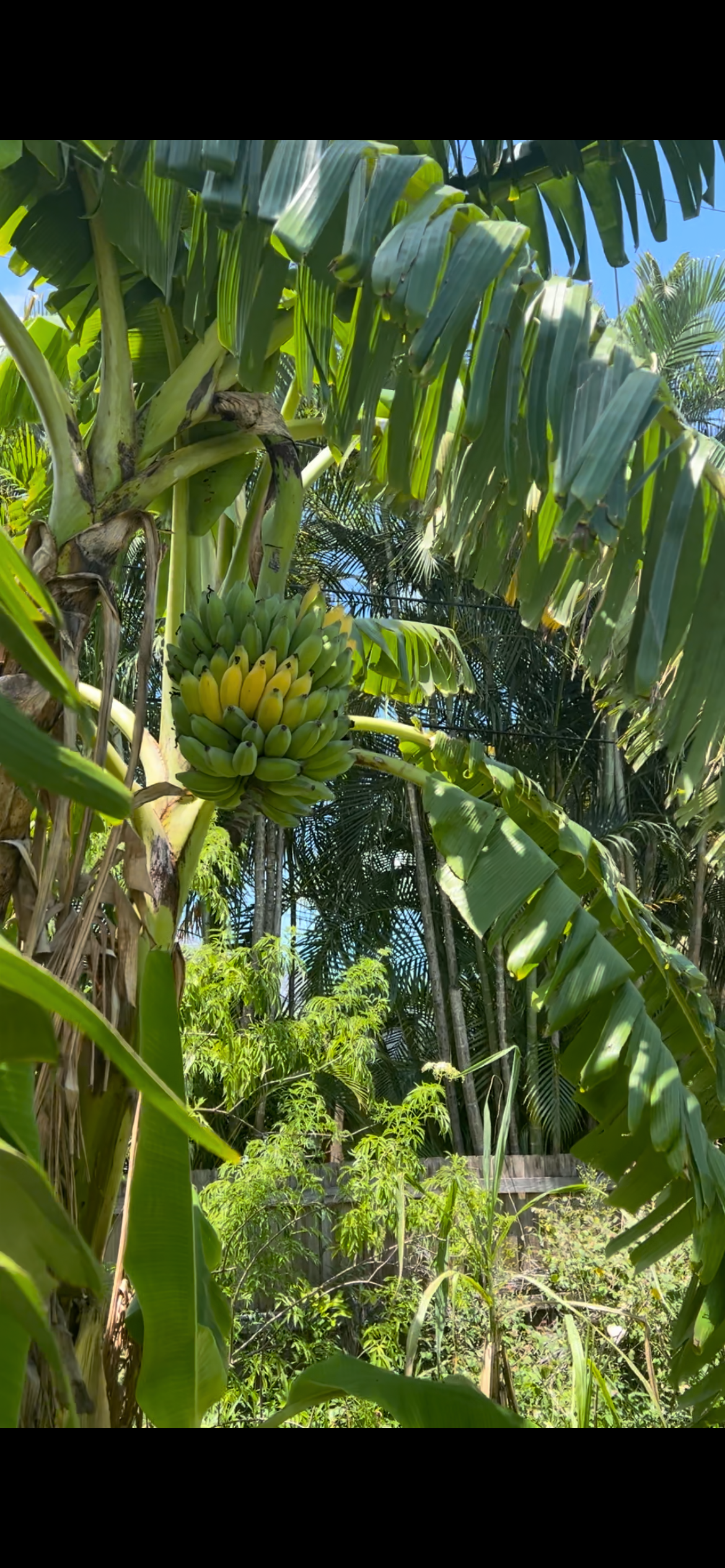
Young Ice Cream Banana pups (Musa acuminata × balbisiana ‘Blue Java’), organically grown right here in Florida and ready to plant. If you've ever wanted to grow a banana that genuinely surprises people — one that stops the conversation when they take their first bite — this is it. The Ice Cream Banana, also known as the Blue Java, is one of the most extraordinary banana varieties in the world: creamy, rich, and unmistakably vanilla-flavored, with a soft, almost ice-cream-like texture that earns its name completely. It's not a marketing gimmick. It really does taste like banana-vanilla ice cream. And it grows beautifully in Florida.
What Makes the Ice Cream Banana Extraordinary
- The flavor: Rich, creamy, and deeply sweet with a pronounced vanilla custard flavor that common Cavendish bananas simply cannot match. The texture is softer and creamier than grocery store bananas — almost like eating a banana that's been blended into ice cream.
- The color: Unripe Blue Java bananas have a distinctive blue-silver tint — a beautiful, unusual color that makes them immediately recognizable. As they ripen, they transition to a pale yellow-cream, often retaining a slight blue-green blush even at peak ripeness.
- Thin skin, more fruit: The skin is noticeably thinner than a Cavendish banana — which means easier peeling and a higher fruit-to-peel ratio. More of what you're actually eating.
- Slower oxidation: Once cut or peeled, the flesh browns significantly more slowly than Cavendish bananas — staying fresh and beautiful longer, ideal for fruit platters, desserts, and any presentation where appearance matters.
- Cold hardiness: One of the most cold-tolerant banana varieties available — can handle temperatures down to around 20°F once established, making it suitable for Central and even parts of North Florida where other banana varieties struggle.
- Fast-growing: In Florida's warm, humid climate, Ice Cream Banana plants grow vigorously and typically begin producing fruit within 18–24 months of planting.
- Stunning tropical beauty: Large, lush leaves and an impressive stature — typically reaching 15–20 feet at maturity — make it a dramatic focal point in any tropical or edible landscape.
Culinary Uses
The Ice Cream Banana's exceptional flavor, creamy texture, thin skin, and slow-browning flesh open up culinary possibilities that ordinary bananas can't match:
- Fresh eating: The best way to experience it — eat at peak ripeness when the skin is pale yellow and slightly speckled. The flavor is at its most intense and the texture at its creamiest.
- Fruit platters & charcuterie boards: The slow oxidation makes it ideal for presentations — sliced Blue Java stays beautiful far longer than Cavendish without browning.
- Nice cream: Freeze ripe bananas and blend for a one-ingredient "nice cream" that genuinely rivals dairy ice cream in richness and vanilla flavor. Add a splash of coconut milk for extra creaminess.
- Smoothies: Adds a rich, vanilla-custard depth to smoothies that transforms them from ordinary to extraordinary.
- Baking: Use in banana bread, muffins, and pancakes for a more complex, vanilla-forward flavor than standard bananas provide.
- Grilled: Slice in half lengthwise and grill for 3–4 minutes — the natural sugars caramelize beautifully and the vanilla flavor intensifies. Serve with coconut cream and a drizzle of honey.
- Dried: Dehydrate slices for intensely sweet, vanilla-flavored banana chips unlike anything available commercially.
The Peel Tea Discovery — Zero Waste & Surprisingly Delicious
Here's something we stumbled upon while crafting our herbal tea blends: the peels of the Ice Cream Banana make a remarkably sweet, vanilla-forward tea that has to be tasted to be believed. The thin skin of the Blue Java is packed with the same vanilla flavor compounds as the fruit itself — and when dried and brewed, those compounds concentrate into something genuinely special.
How we make it: After eating the fruit, we dry the peels in a convection oven at around 120°F — low and slow, to preserve the delicate flavor compounds without cooking them off. The dried peels can then be steeped like any herbal tea. The result is a naturally sweet, vanilla-scented brew with a gentle, warming depth — no added sweetener needed. It's one of the most pleasant zero-waste discoveries we've made in the garden.
This works specifically because of the Ice Cream Banana's thin skin and high concentration of vanilla flavor compounds — a regular Cavendish peel tea simply doesn't compare. Grow these bananas and you get two products from one plant: the fruit and the tea.
How to Plant Your Pup
- Choose your spot: Full sun, sheltered from strong winds if possible. Banana leaves are large and can shred in high winds.
- Prepare the soil: Bananas are heavy feeders that love rich, moist, well-draining soil. Dig a large hole and amend generously with compost.
- Plant the pup: Plant at the same depth it was growing. Firm the soil around the base and water in thoroughly.
- Mulch with its own trimmings: Whenever you trim leaves or cut back old growth, lay the cuttings directly around the base of the plant. Banana biomass breaks down quickly in Florida's heat and humidity, feeding the plant with its own nutrients — a perfectly closed loop.
- Water regularly: Bananas need consistent moisture, especially while establishing. Water deeply 2–3 times per week in dry periods.
Growing Tips for Florida Gardeners
- Sun: Full sun for best growth and fruiting. Minimum 6 hours of direct sun daily.
- Water: Consistent and generous. Bananas are thirsty plants — don't let them dry out. The thick mulch layer from their own trimmings significantly reduces watering frequency.
- Fertilizer: Less than you'd think. We rarely fertilize ours — instead, every time we trim the plant, the cuttings go right back around the base as mulch. The plant essentially feeds itself. Banana biomass is rich in potassium and breaks down quickly in Florida's climate, returning nutrients directly to the root zone.
- Cold hardiness: One of the most cold-tolerant banana varieties. Can handle brief cold snaps that would damage other varieties. Protect the rhizome with heavy mulch during cold spells.
- The banana flower: Once your bunch has fully set and all the hands of bananas have formed, remove the dangling flower blossom (the large purple-red teardrop at the end of the bunch). This redirects the plant's energy entirely into ripening the fruit rather than continuing to develop the flower. And don't discard it — banana blossoms are edible and delicious. Slice the inner petals thin for stir-fries (they have a meaty, artichoke-like texture), or dry them for use in herbal tea blends. A true zero-waste harvest.
- Fruiting timeline: Typically 18–24 months from planting to first fruit in Florida's climate. Once the mother plant fruits, it produces pups that will fruit in turn — a self-perpetuating cycle.
- After fruiting: The mother plant dies after producing its bunch. Cut it down, lay the stalks around the base as mulch, and allow the pups to take over — your banana patch becomes permanent, self-renewing, and self-feeding.
Organically grown in Florida 🌿 | Ships as young pups ready to plant | Typically fruits within 18–24 months | Fruit + peel + blossom — zero waste
Share