What's Growing on Florida?
Red torch, Mexican sunflower
Red torch, Mexican sunflower
Couldn't load pickup availability
Red Torch Mexican Sunflower — Florida's Most Spectacular Pollinator & Soil-Building Plant
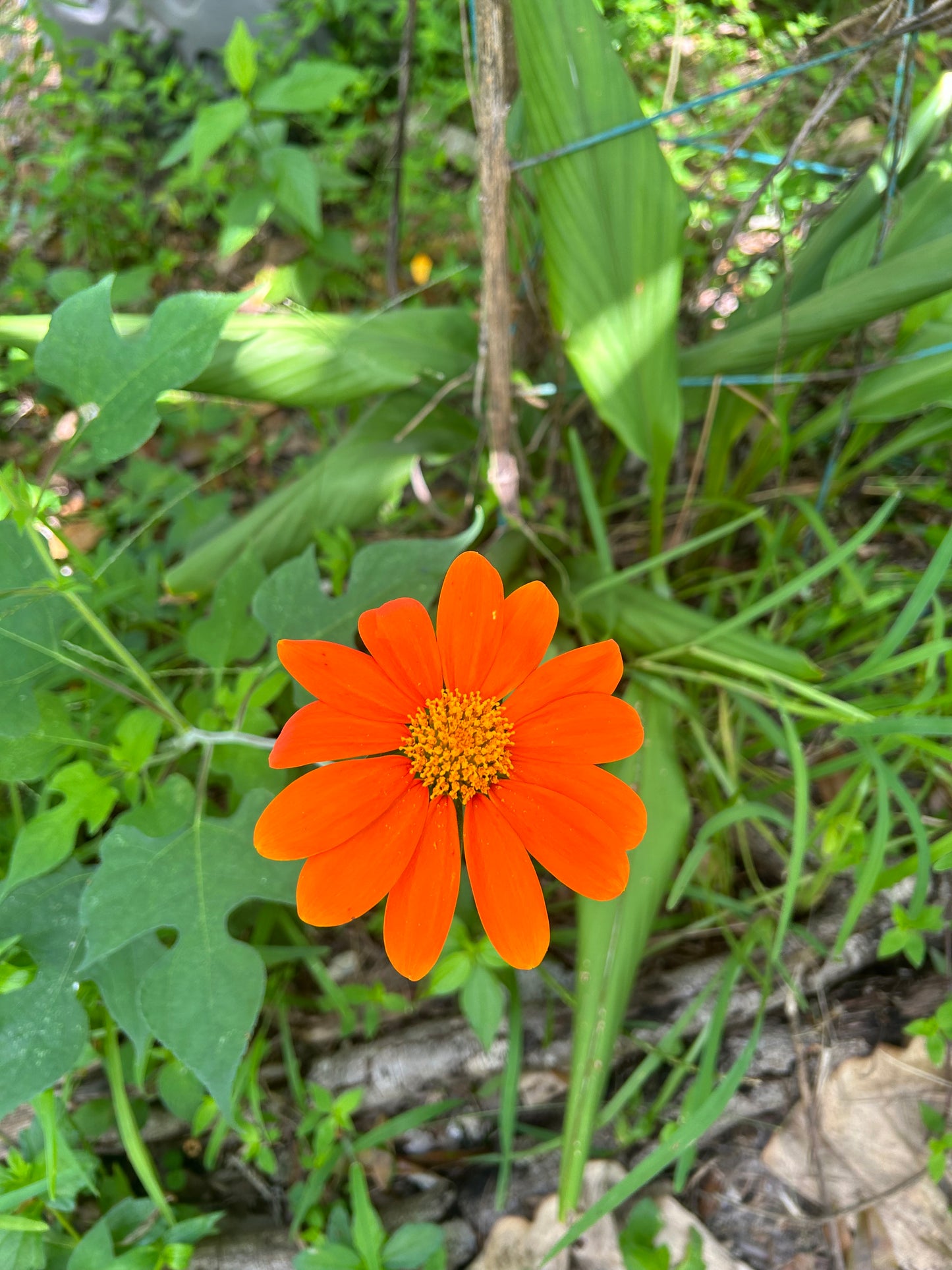
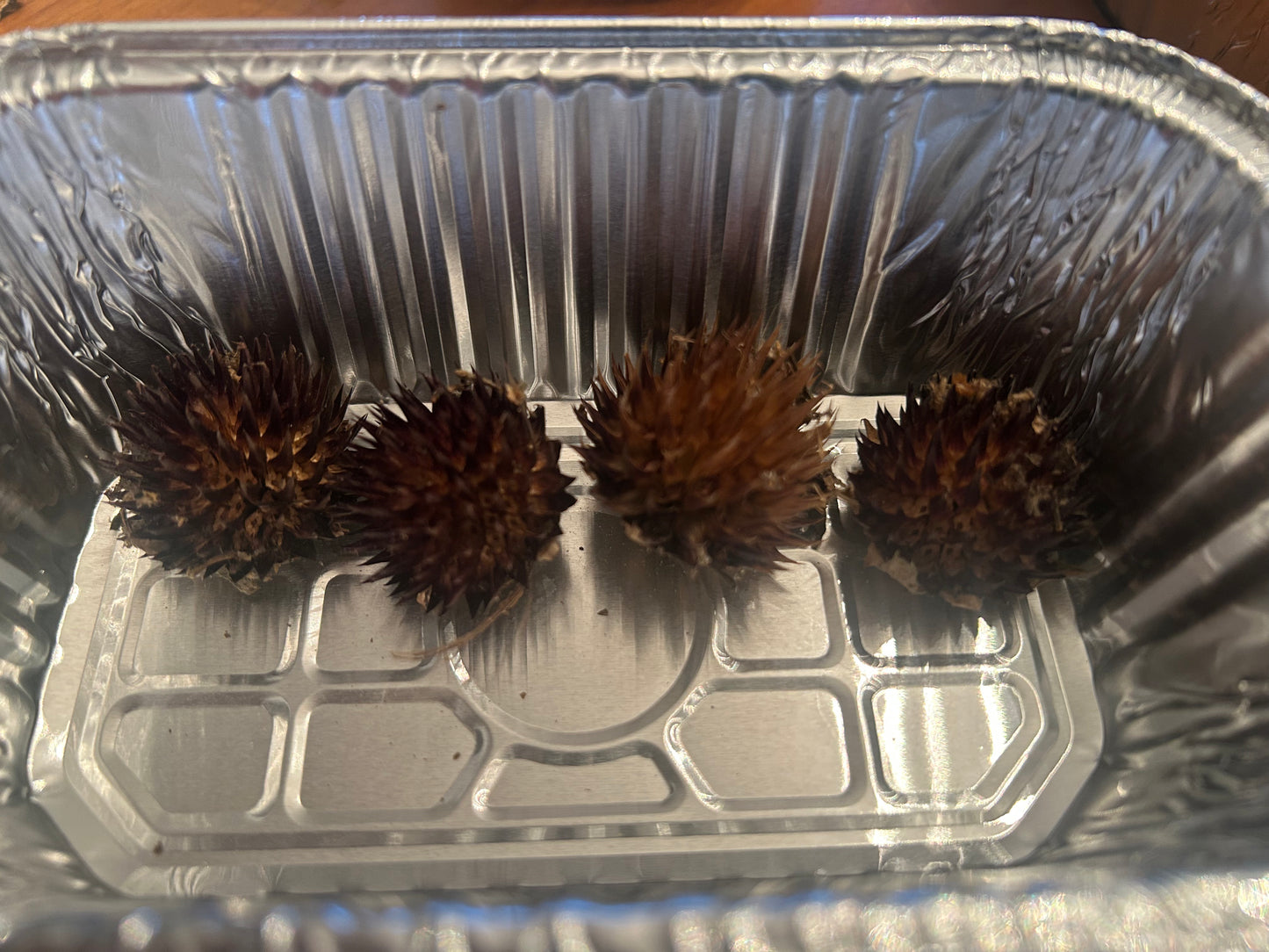
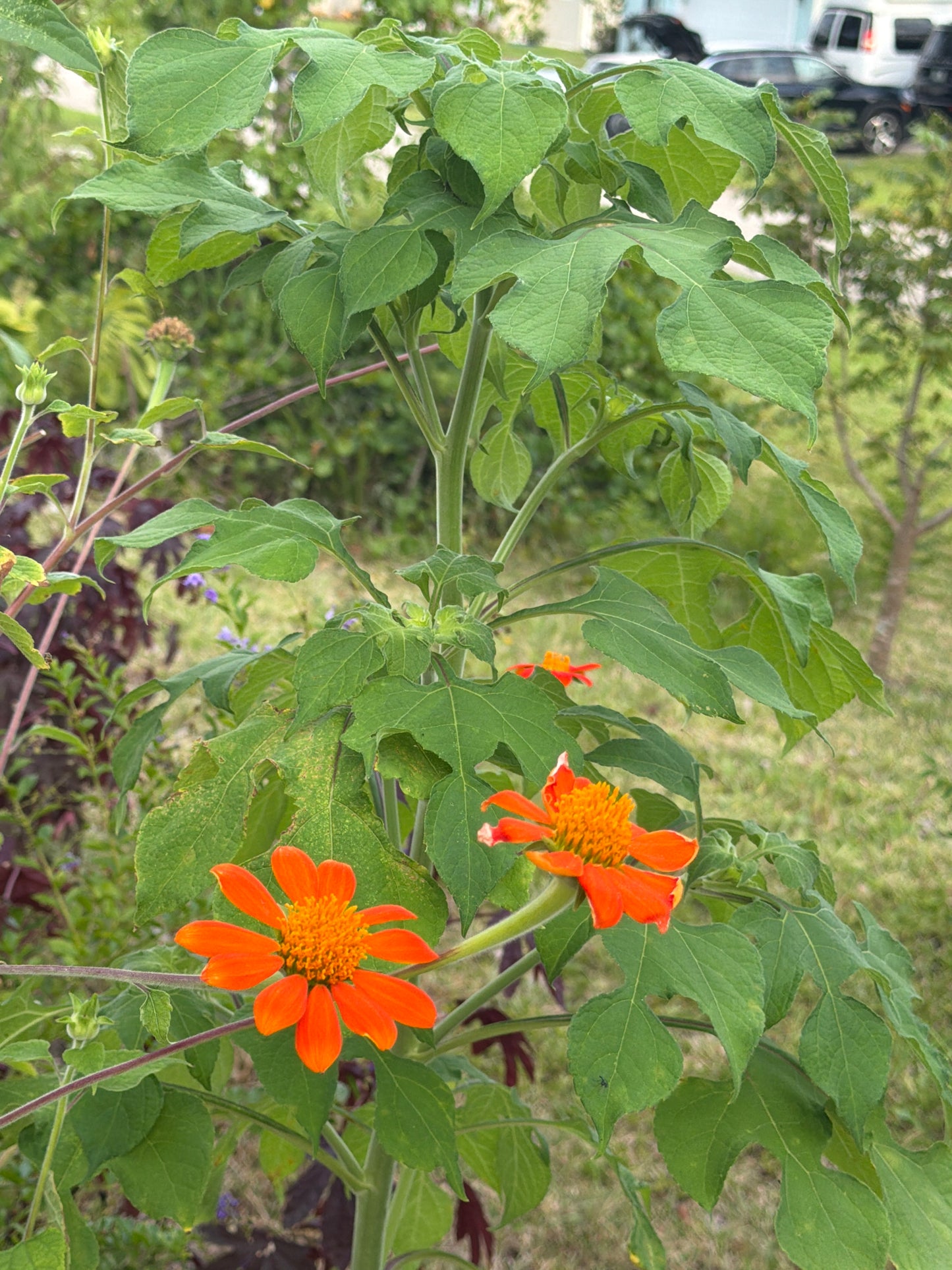
4 dried flower heads (deadheads) per pack, each loaded with seeds. Tithonia rotundifolia — the Red Torch Mexican Sunflower — is one of the most visually dramatic, ecologically valuable, and garden-useful plants you can grow in Florida. Towering 4–6 feet tall with blazing orange-red blooms the size of your fist, it commands attention from across the garden. But the Red Torch is far more than a pretty face — it's a pollinator magnet, a soil-building powerhouse, and one of the most heat-tolerant flowering plants available for Florida's brutal summers.
The Flower That Stops Traffic
The blooms of Tithonia rotundifolia are genuinely spectacular — large, velvety, fiery orange-red daisy flowers on tall, branching stems that keep producing from summer through fall. The color is intense and saturated in a way that photographs can't fully capture — a true tropical orange that glows in the Florida sun. Plants grow quickly into substantial shrubs 4–12 feet tall and quite wide, creating a dramatic presence in any landscape. As a cut flower, Red Torch is exceptional — long-stemmed, long-lasting in the vase, and unlike anything available at a florist.
The Pollinator Magnet
If you want to attract pollinators to your garden, few plants rival Tithonia for sheer effectiveness. The large, open blooms are perfectly designed for pollinator access and produce abundant nectar and pollen throughout the long flowering season:
- Butterflies: An exceptional butterfly plant — swallowtails, monarchs, painted ladies, and dozens of other species are irresistibly drawn to the blooms. In Florida's butterfly-rich environment, a patch of Red Torch in full bloom is a constant flutter of wings.
- Bees: Both honeybees and native bees work the flowers heavily. The long flowering season provides a sustained nectar source through the summer months when many other plants have stopped blooming.
- Hummingbirds: The tubular florets and vivid orange-red color are precisely what hummingbirds seek. Plant near a window or seating area for regular hummingbird visits.
- Beneficial insects: Parasitic wasps, predatory beetles, and other beneficial insects that control garden pests are attracted to Tithonia flowers — making it a natural pest management tool as well as a pollinator plant.
The Soil-Building Powerhouse
This is where Tithonia rotundifolia earns its reputation among permaculture gardeners and regenerative farmers as one of the most valuable plants in the garden. The Red Torch Mexican Sunflower is a dynamic accumulator — a plant that mines deep nutrients from the soil with its extensive root system and concentrates them in its lush, fast-growing biomass.
- Phosphorus accumulation: Research from Africa, where Tithonia is widely used as a green manure crop, has shown that its biomass is exceptionally rich in phosphorus — one of the most important and often deficient nutrients in tropical and subtropical soils like Florida's sandy soils. Chop-and-drop applications of Tithonia biomass have been shown in multiple studies to significantly improve crop yields, sometimes matching the effect of synthetic phosphorus fertilizers.
- Nitrogen & potassium: The leaves and stems are also rich in nitrogen and potassium, making the biomass a complete, balanced organic fertilizer when used as mulch or compost.
- Chop-and-drop mulching: Simply cut the plant back periodically and lay the stems and leaves around the base of your garden plants. The biomass breaks down quickly in Florida's heat and humidity, releasing nutrients directly into the root zone. One of the most effective and effortless soil improvement techniques available.
- Composting: The lush, fast-growing biomass is an excellent green material for compost piles — high in nitrogen and breaks down rapidly.
- Living windbreak: The tall, dense growth provides effective wind protection for more delicate garden plants during Florida's summer storm season.
How to Grow from Seed
- Extract the seeds: Carefully break open each dried flower head — they can be spiky, so handle with care or wear gloves. Inside you'll find numerous small, elongated seeds. Each deadhead contains dozens of viable seeds.
- Direct sow: Sow directly into warm soil in full sun. Press seeds lightly into the soil surface — they need light to germinate, so don't bury deeply. Cover with a thin layer of soil (1/4 inch maximum).
- Keep moist: Water gently and keep the soil consistently moist until germination — typically 5–10 days in Florida's warm conditions.
- Thin seedlings: Once established, thin to 18–24 inches apart to allow plants to reach their full size. Crowded plants will be taller and leggier with fewer blooms.
- Or start indoors: Start seeds indoors 4–6 weeks before transplanting. Transplant after any frost risk has passed — in Florida, this means year-round planting is possible in most regions.
Growing Tips for Florida Gardeners
- Sun: Full sun is essential. Red Torch thrives in Florida's intense summer sun and actually performs better in heat than most flowering plants.
- Water: Moderate water needs while establishing. Once established, surprisingly drought-tolerant. Florida's summer rainy season typically provides all the water needed.
- Soil: Thrives in poor, sandy, or depleted soils — ideal for Florida's challenging soil conditions. Does not require rich soil; in fact, overly fertile soil can produce lush foliage at the expense of flowers.
- Size: Plants reach 4–12 feet tall and wide — give them space. Excellent at the back of borders, as a temporary hedge, or as a standalone specimen.
- Deadheading: Remove spent flowers to encourage continuous blooming, or leave them to set seed for next season's plants. Tithonia self-seeds readily in Florida — you may find volunteer plants appearing in subsequent seasons.
- Chop-and-drop timing: Cut plants back by 1/3 to 1/2 when they become leggy or after a flush of blooming. This encourages fresh growth and more flowers while providing a nutrient-rich mulch for the garden.
- Season: Blooms from summer through fall in Florida. Plant in spring for summer blooms, or plant in fall for a late-season display before the first cool spell.
Florida-grown seeds 🌿 | 4 deadheads per pack (dozens of seeds) | Pollinator magnet + soil builder | One of Florida's best summer flowering plants
Share