What's Growing on Florida?
White sweet potato slips
White sweet potato slips
Couldn't load pickup availability
White Sweet Potato Slips — Florida's Most Pest-Resistant Sweet Potato
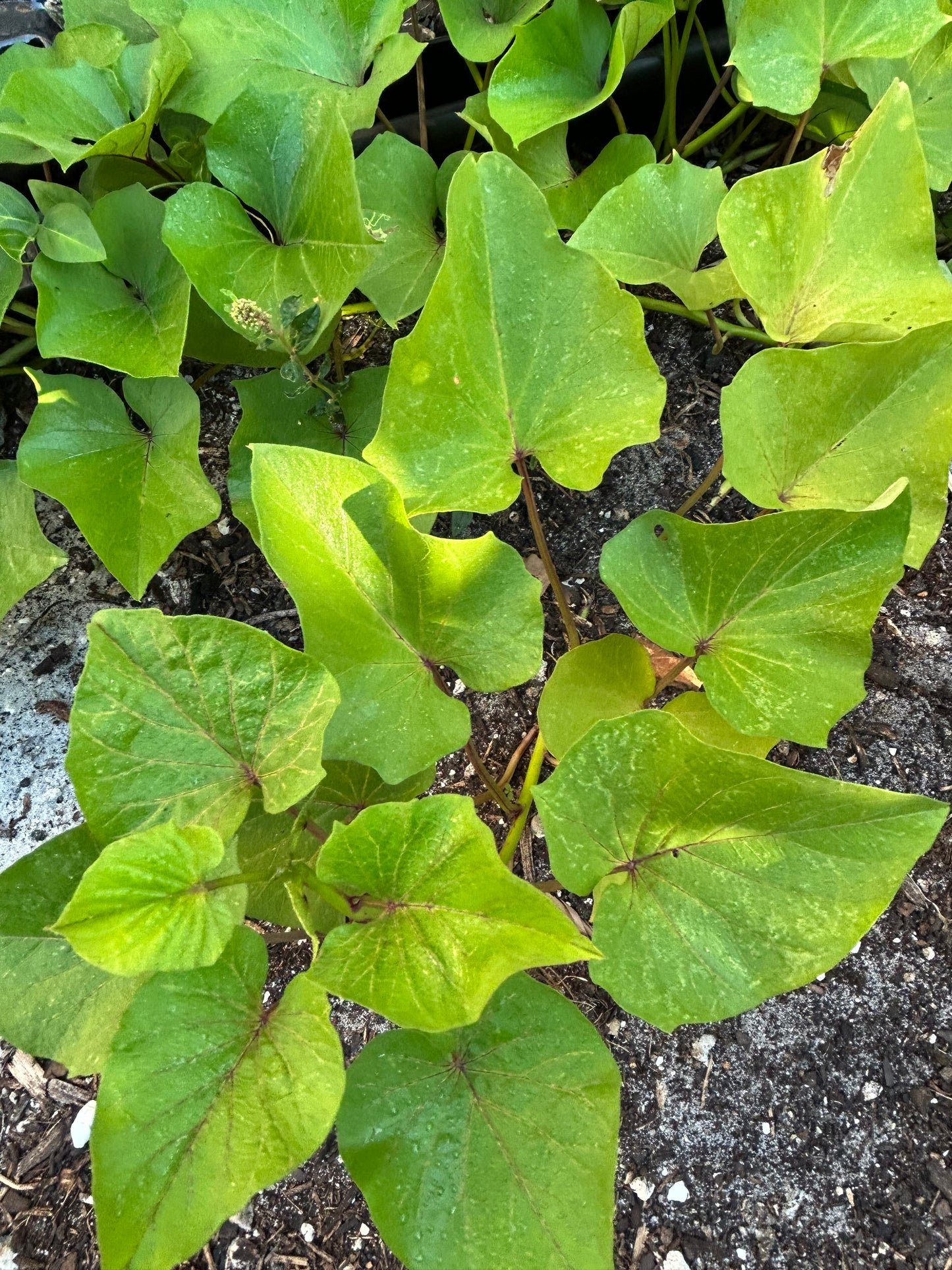
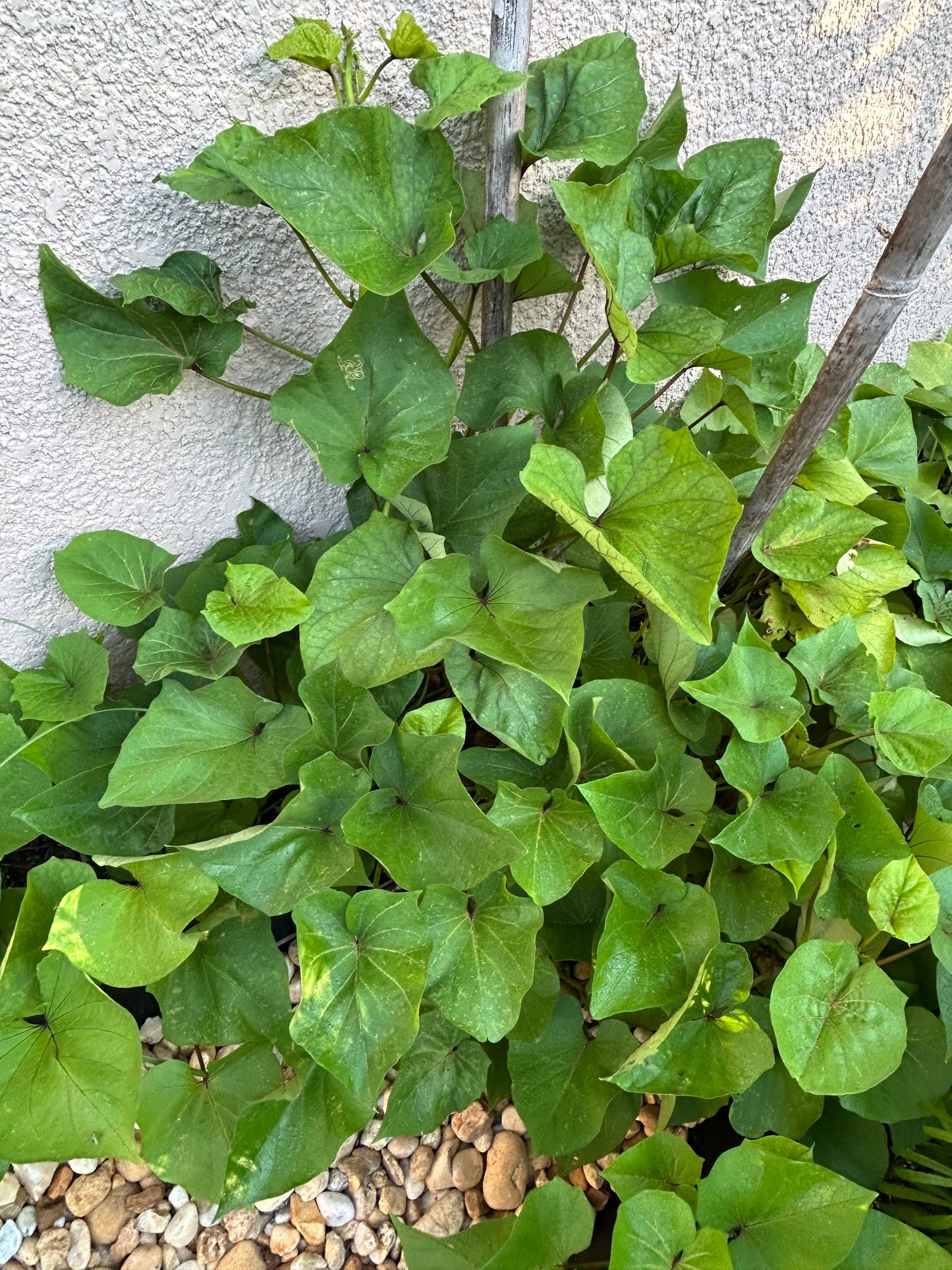
3 slips per order. Ipomoea batatas — the white sweet potato — is one of the most productive, pest-resistant, and versatile food plants you can grow in a Florida garden. Among all the sweet potato varieties grown here in Florida, white sweet potatoes consistently stand out for their vigor, resilience, and sheer reliability in warm, humid conditions. If you've struggled with pests destroying your sweet potato crop, this is the variety to try. And if you've never grown sweet potatoes before, this is the one to start with.
A Food That Has Fed the World for Thousands of Years
The sweet potato is one of humanity's oldest and most important food crops — cultivated for over 5,000 years, originating in the tropical Americas and spreading across the globe through trade, migration, and cultural exchange. But it was in Asia, Africa, and the Caribbean that the sweet potato truly became a cultural cornerstone — not just as a root vegetable, but as a whole-plant food where the leaves were just as valued as the tubers.
- Asia: In China, Japan, the Philippines, Vietnam, and across Southeast Asia, sweet potato leaves have been eaten as a staple green vegetable for centuries. In many Asian cuisines, the leaves are considered the primary crop — stir-fried with garlic and oyster sauce, added to soups, or blanched and served as a side dish. The white-fleshed varieties are particularly prized for their mild, versatile flavor.
- Africa: Sweet potato leaves are a dietary staple across sub-Saharan Africa, where they are cooked into stews, sautéed with groundnut paste, or added to soups. In countries like Uganda, Rwanda, and Mozambique, sweet potato leaf dishes are everyday meals — and nutritional research has confirmed what generations of African cooks already knew: the leaves are extraordinarily nutritious, often more so than the tubers themselves.
- The Caribbean: Brought to the Caribbean through both indigenous cultivation and the African diaspora, sweet potatoes became deeply embedded in Caribbean food culture. The white-fleshed varieties are especially common across Jamaica, Trinidad, Puerto Rico, and the Dominican Republic — roasted, boiled, fried, and incorporated into traditional dishes passed down for generations. The leaves are used in callaloo-style preparations and added to soups and stews.
When you grow white sweet potatoes in your Florida garden, you're participating in a food tradition that spans continents and millennia — and you're growing one of the most nutritionally complete plants available to the home gardener.
Why White Sweet Potato?
- Exceptional pest resistance: From firsthand experience growing multiple sweet potato varieties in Florida, white sweet potatoes are among the most pest-resistant available. Where other varieties attract weevils, beetles, and other soil pests, white sweet potatoes hold their own — producing clean, healthy tubers even in challenging conditions.
- Highly productive: Fast-growing and vigorous, white sweet potatoes produce generous yields of tubers in Florida's warm climate. A small planting can yield a substantial harvest.
- Dual-purpose plant: Unlike most vegetables where you harvest only one part, the white sweet potato gives you two crops from one plant — the tubers underground and the tender leaves above. Both are delicious and nutritious.
- Thrives in Florida's climate: Sweet potatoes are one of the best-adapted food crops for Florida's heat, humidity, and sandy soils. White sweet potatoes are particularly well-suited to the conditions that challenge other vegetables.
- Low-maintenance: Once established, sweet potato vines are vigorous ground covers that suppress weeds, retain soil moisture, and largely take care of themselves.
The Tubers — Creamy, Mildly Sweet & Versatile
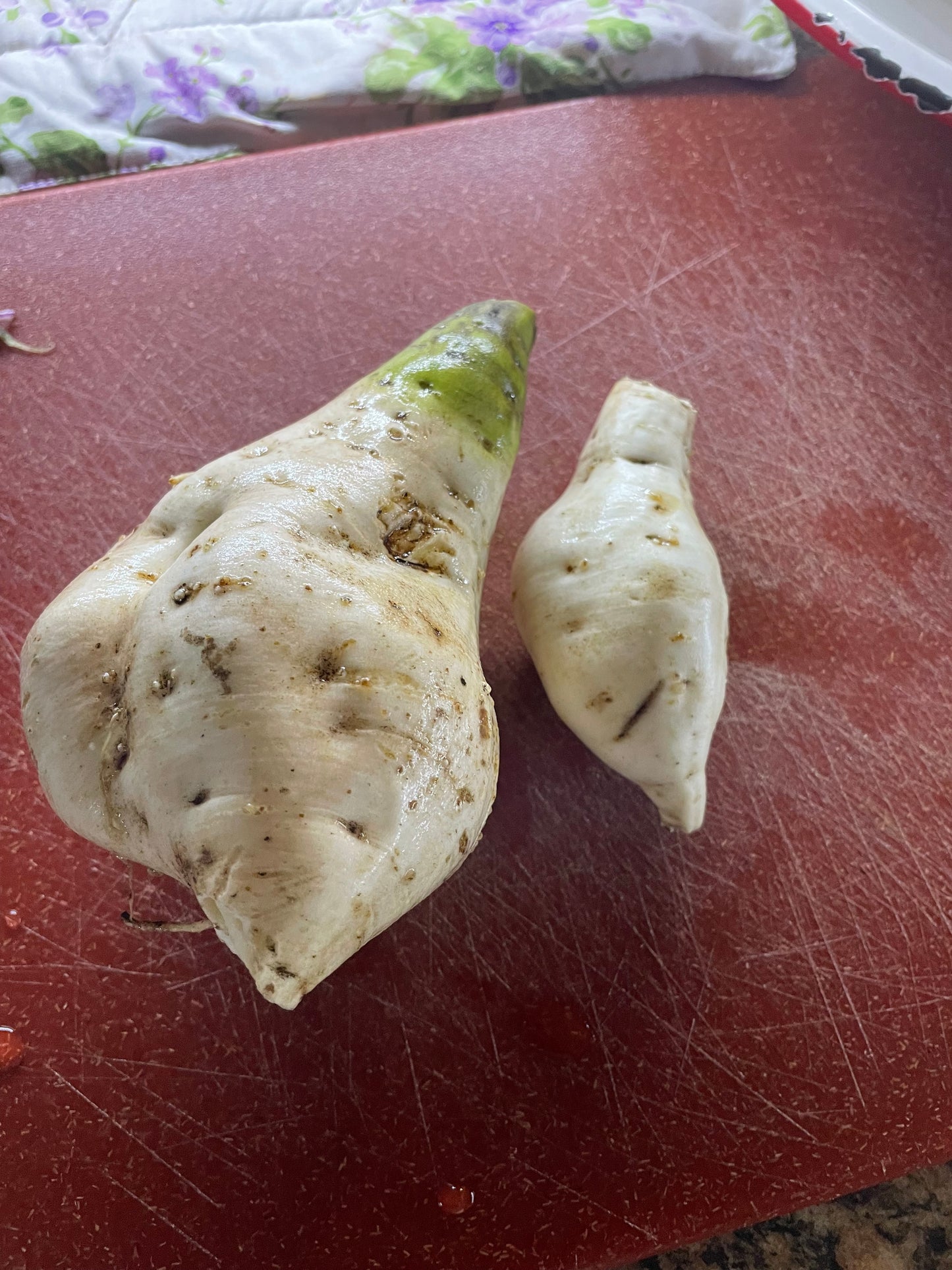
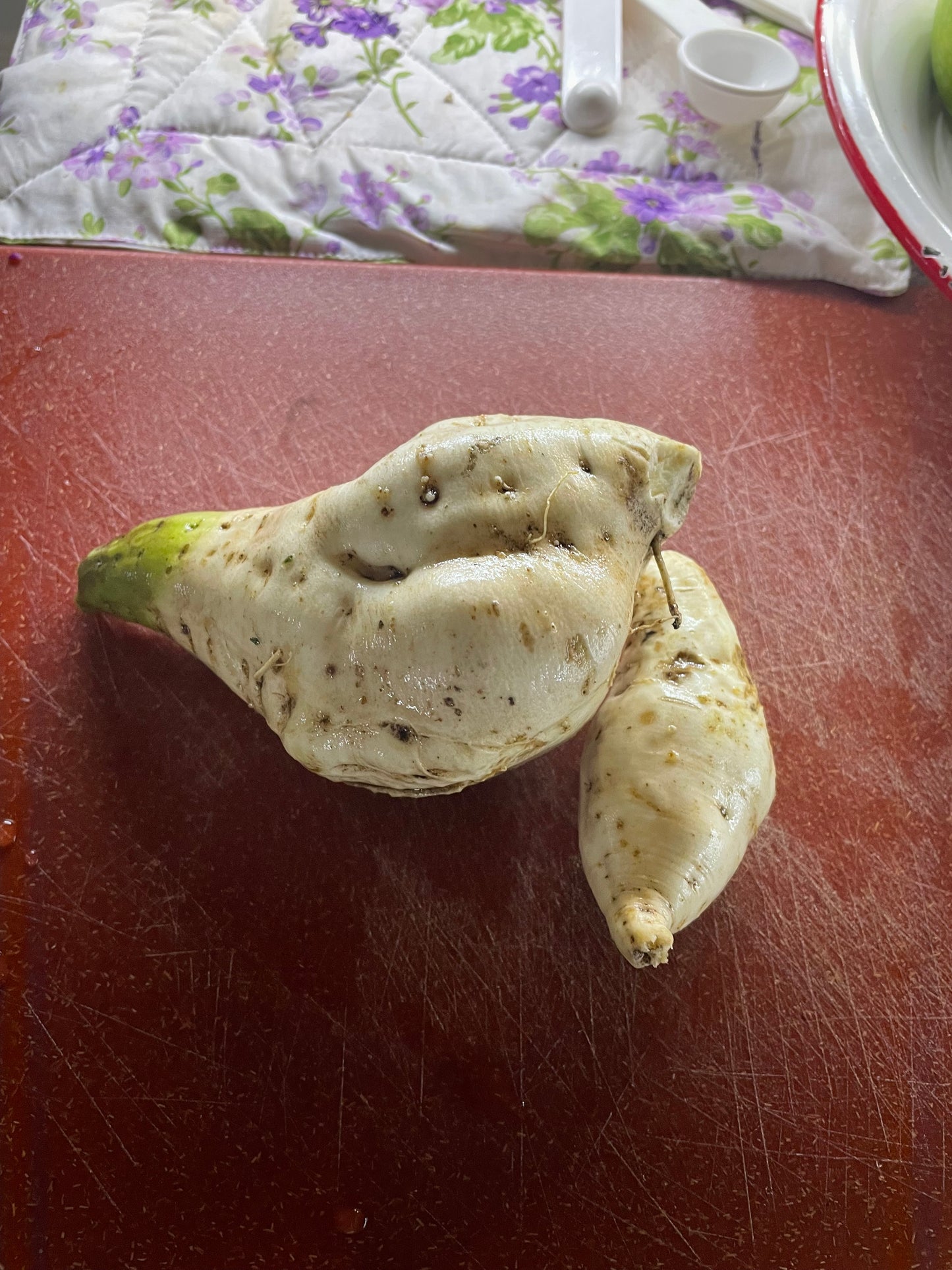
The white sweet potato produces tubers with creamy white flesh and a flavor profile that's distinctly different from the orange varieties most people know. The taste is mildly sweet with a pleasant nuttiness — less sugary than orange sweet potatoes, which makes them more versatile in both sweet and savory cooking. The texture when cooked is smooth and creamy, similar to a Yukon Gold potato but with more depth of flavor.
Culinary Uses — Tubers
- Roasted: Cut into wedges, toss with olive oil, salt, and herbs, and roast at 400°F until caramelized. The mild sweetness concentrates beautifully with dry heat.
- Mashed: Boil and mash with butter, garlic, and cream for a subtler, more savory alternative to orange sweet potato mash. Pairs beautifully with grilled meats and fish.
- Baked: Bake whole until tender for a simple, nutritious meal. The white flesh is less sweet than orange varieties, making it more satisfying as a savory side.
- Fried: Cut into fries or chips and fry or air-fry for a crispy, naturally sweet snack. The lower sugar content means they brown more evenly without burning.
- Soups & stews: Cube and add to soups, curries, and stews — the creamy texture holds up well and adds body to broths.
Culinary Uses — The Leaves
This is where white sweet potatoes truly shine as a dual-purpose crop. The tender young leaves and shoot tips are fully edible and genuinely delicious — a nutritious green that most gardeners don't realize they're already growing. Across Asia, Africa, and the Caribbean, sweet potato leaves are not a novelty — they're a staple:
- Raw in salads: Young, tender leaves have a mild, pleasant flavor — add to salads for a nutritious green with a slightly earthy taste.
- Stir-fried: The most popular preparation across Asia and the Caribbean — stir-fry young leaves and shoot tips with garlic, ginger, and soy sauce for a quick, nutritious side dish. The texture wilts beautifully in a hot pan.
- Soups & stews: Add leaves to soups in the last few minutes of cooking — they wilt quickly and add color, nutrition, and a mild green flavor.
- Sautéed: Simple sauté with olive oil, garlic, and a squeeze of lemon — a quick, nutritious side that takes under 5 minutes.
Nutritional Profile
- Tubers: Rich in complex carbohydrates, dietary fiber, vitamins B6 and C, potassium, and manganese. Lower glycemic index than white potatoes.
- Leaves: Exceptionally nutritious — rich in vitamins A, C, and K, calcium, iron, and antioxidants. Gram for gram, sweet potato leaves are more nutritious than the tubers themselves — a fact long known across Asia and Africa, and now confirmed by modern nutritional science.
How to Plant Your Slips
- Timing: In Florida, year-round planting is possible in most regions. Plant after any frost risk has passed and soil is warm.
- Choose your spot: Full sun is essential for good tuber production — at least 6–8 hours of direct sun daily.
- Prepare the soil: Loose, well-draining soil is ideal. Raised beds or mounded rows work particularly well. Avoid heavy clay soils.
- Plant the slips: Plant each slip 12–18 inches apart in rows 3–4 feet apart. Bury the slip up to the first set of leaves, leaving the growing tip above soil. Water in well.
- Mulch: Apply a layer of organic mulch around the base to retain moisture and suppress weeds.
- Water: Water regularly for the first 2–3 weeks while the slips establish roots. Once established, sweet potatoes are drought-tolerant.
Growing Tips for Florida Gardeners
- Harvest timing: Tubers are typically ready 90–120 days after planting. Harvest when the leaves begin to yellow or the soil cracks above the tubers.
- Leaf harvest: Begin harvesting young shoot tips 3–4 weeks after planting. Never harvest more than 1/3 of the vine at once.
- Curing: After harvest, cure tubers at 85–90°F with high humidity for 5–7 days. Properly cured sweet potatoes store for months.
- Saving slips: Keep a few tubers from your harvest to produce next season's slips — place in a warm, bright spot and they'll sprout within a few weeks.
Florida-grown slips 🌿 | 3 slips per order | Dual harvest: tubers + edible leaves | Florida's most pest-resistant sweet potato variety
Share